Generative NFT Collection
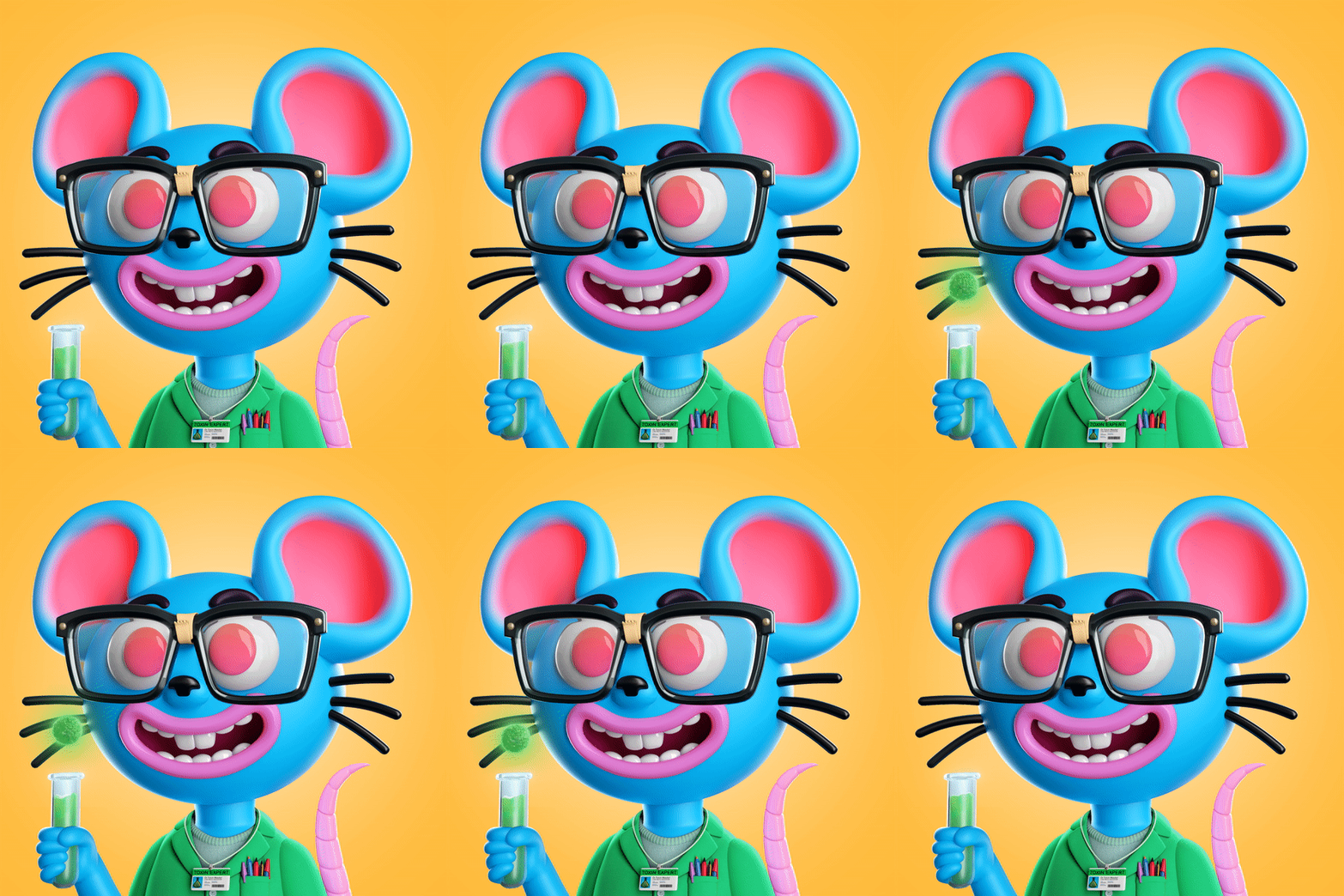
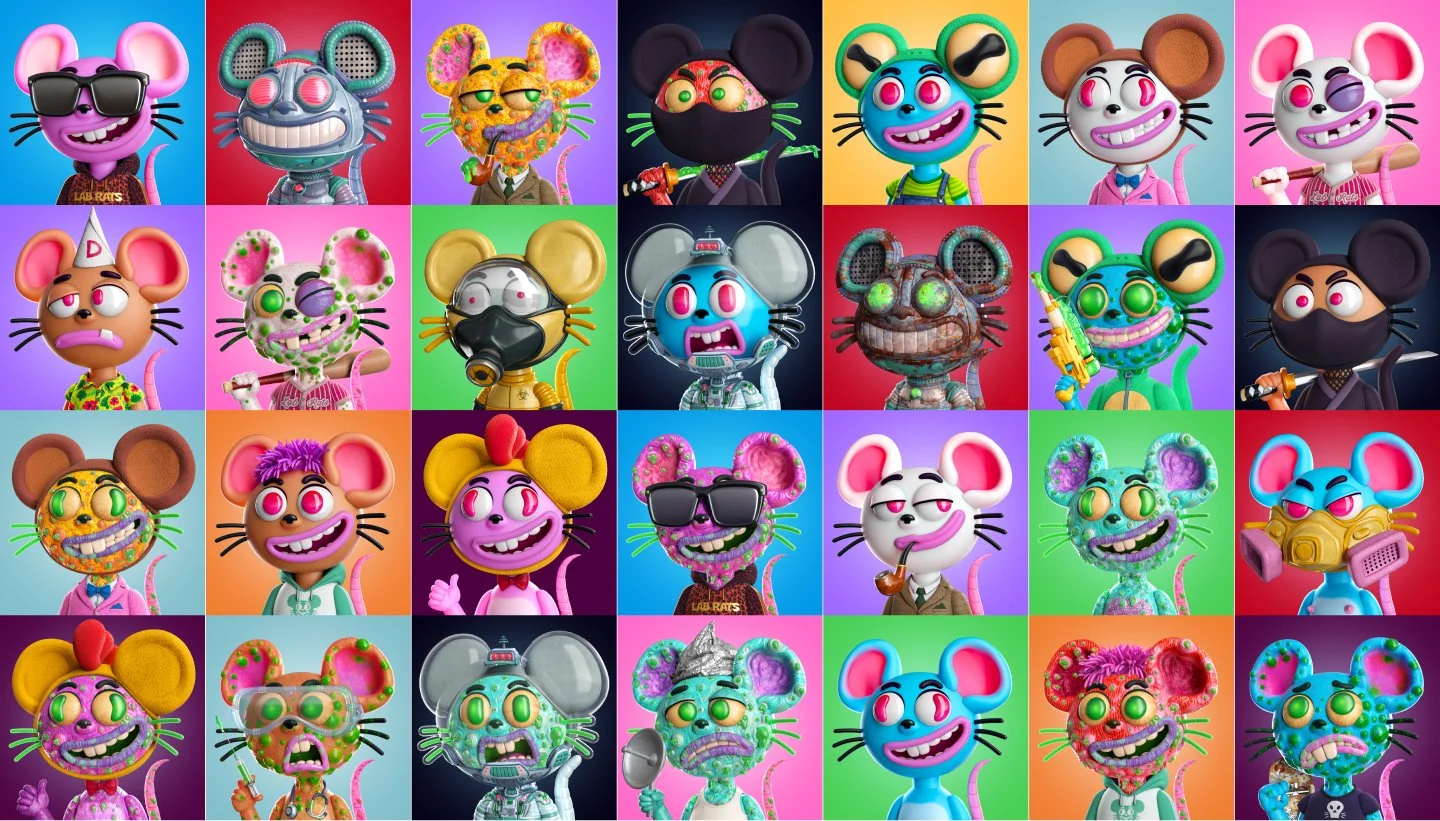
LabRats was a NFT collection that launched in December 2021 and continues to evolve today.
The story
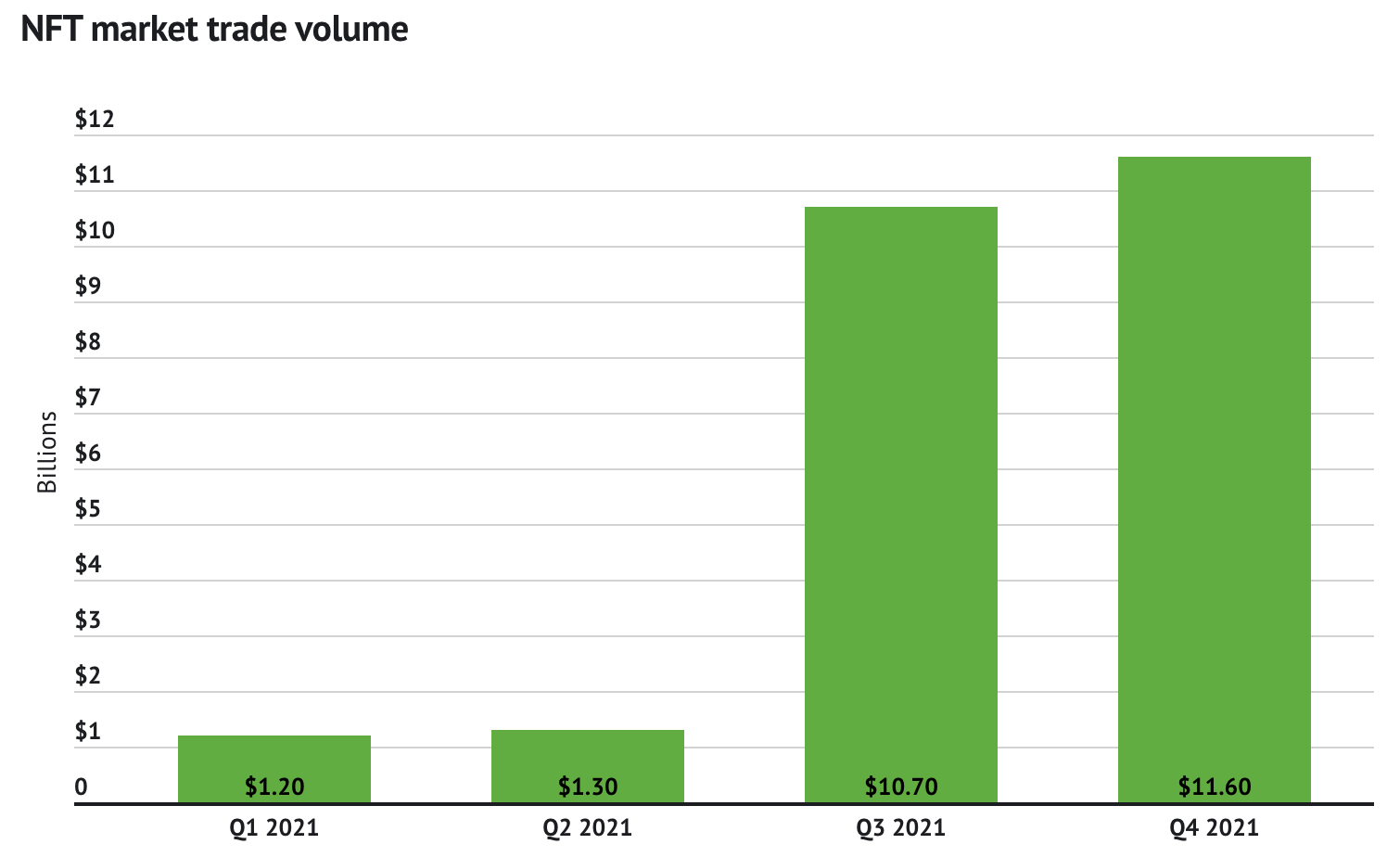
At the beginning of 2021, only a niche group of crypto enthusiasts knew what non-fungible tokens (NFT) were. But by the end of the year nearly $41 billion had been spent on NFTs, making the market for digital artwork and collectibles almost as valuable as the global art market.
One of the most popular types of NFT collection was the generative PFP, digital avatars often used as profile pictures on social media. These collections were generally created using an algorithm to randomly mix together a set of elements (eyes, mouths, arms, clothes etc.) which would then define how rare (and therefore valuable) each one was.
Spotting an opportunity to get in on the action while the market was hot, I brought together a small team that included a blockchain engineer and the incredibly talented 3D artist Zinkete.
World building
The first challenge was to create a concept for our collection. It was important to find something that felt playful and immersive, whilst giving us enough room to build a narrative. After a few rounds of brainstorming we landed on LabRats, a group of genetically engineered rats who had all been exposed to $TOXIN (our own cryptocurrency). By holding a LabRat NFT you would automatically accumulate 10 $TOXIN everyday, encouraging people not to sell and increasing the value.
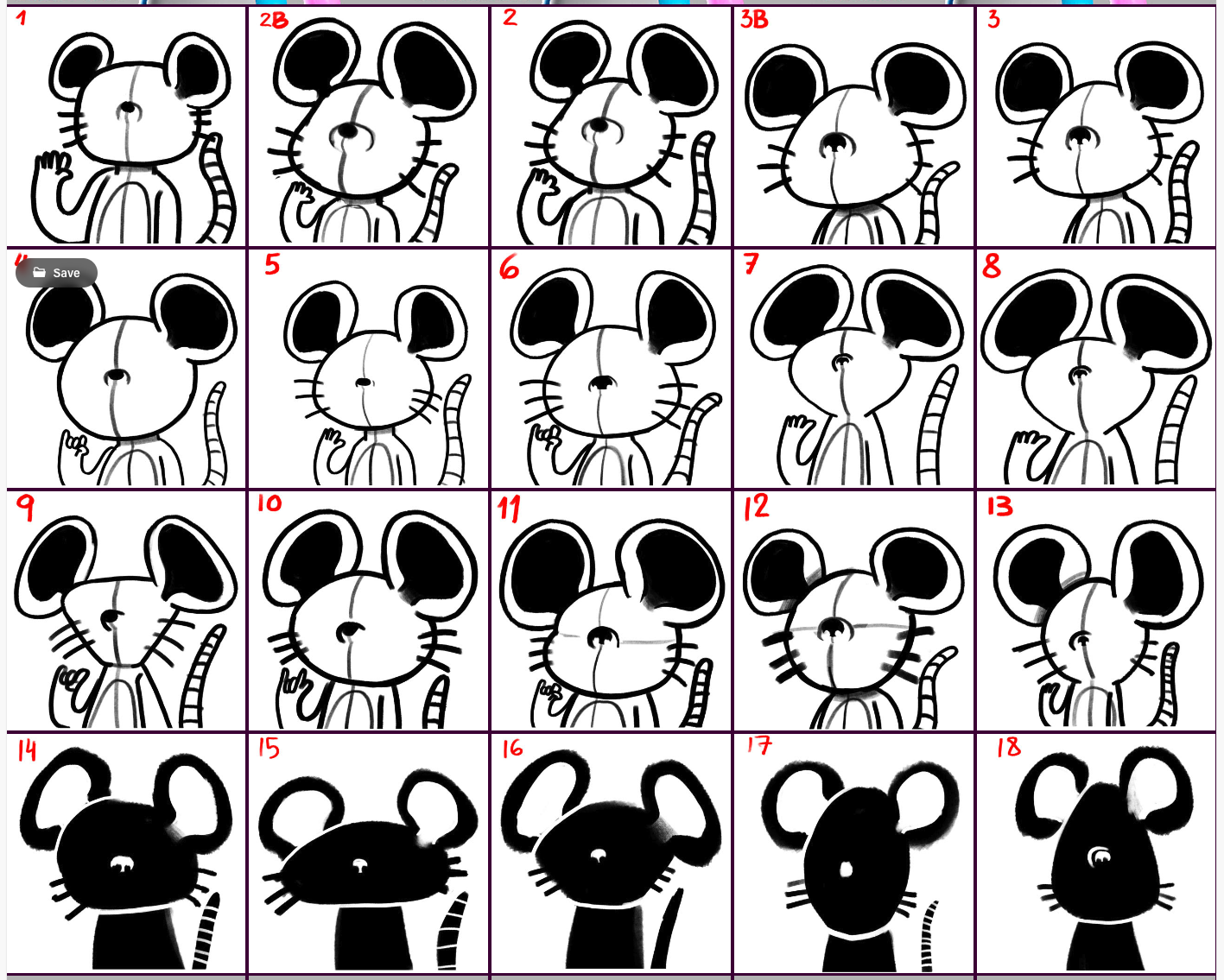
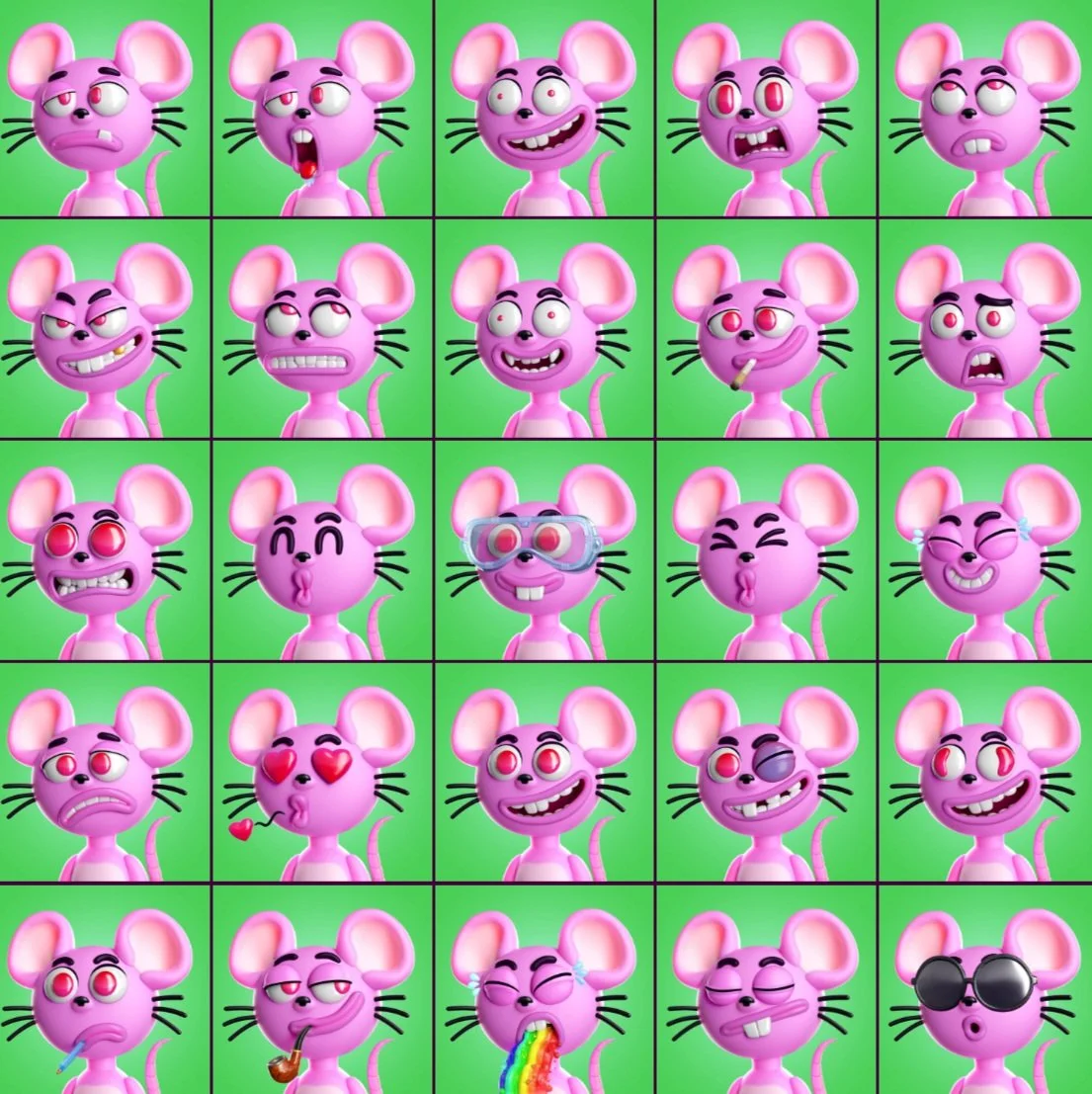
Once we had the concept and the mechanics of the smart contract figured out we went to work fleshing out the LabRats world. A big challenge was coming up with the different elements that would be used to generate the NFTs, thinking up 50 facial expressions for a 3D rat is harder than you may think.
Creating a community
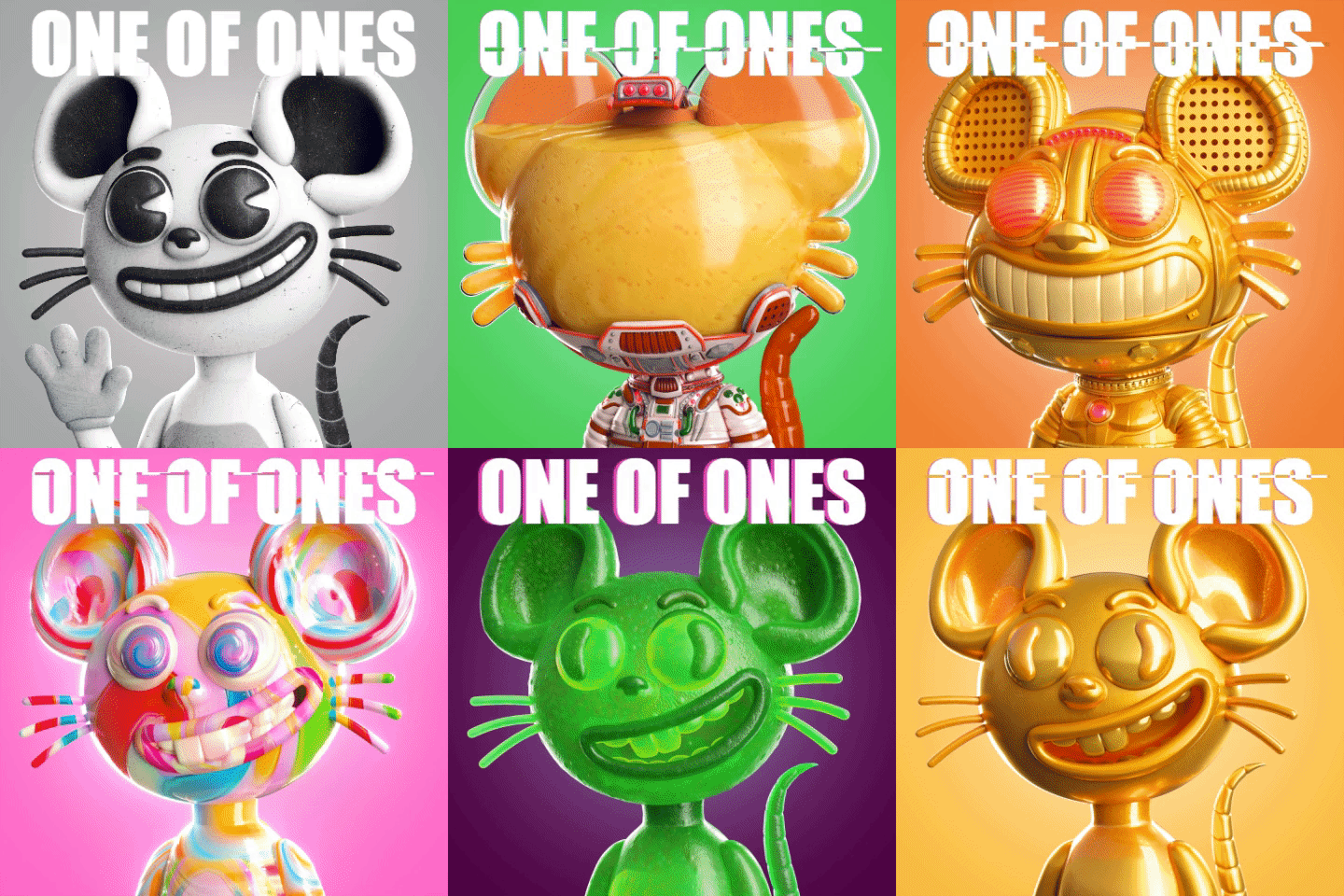
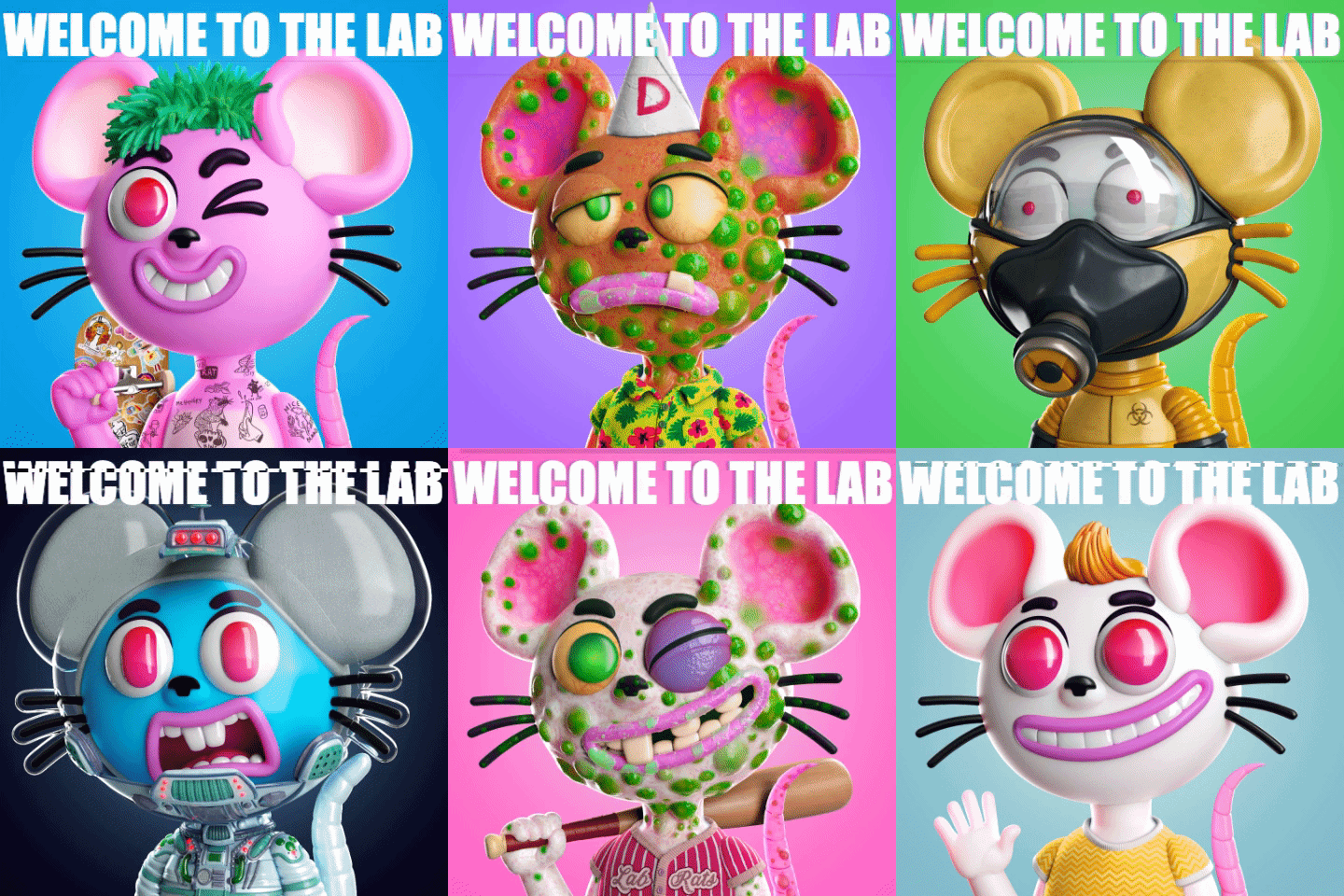
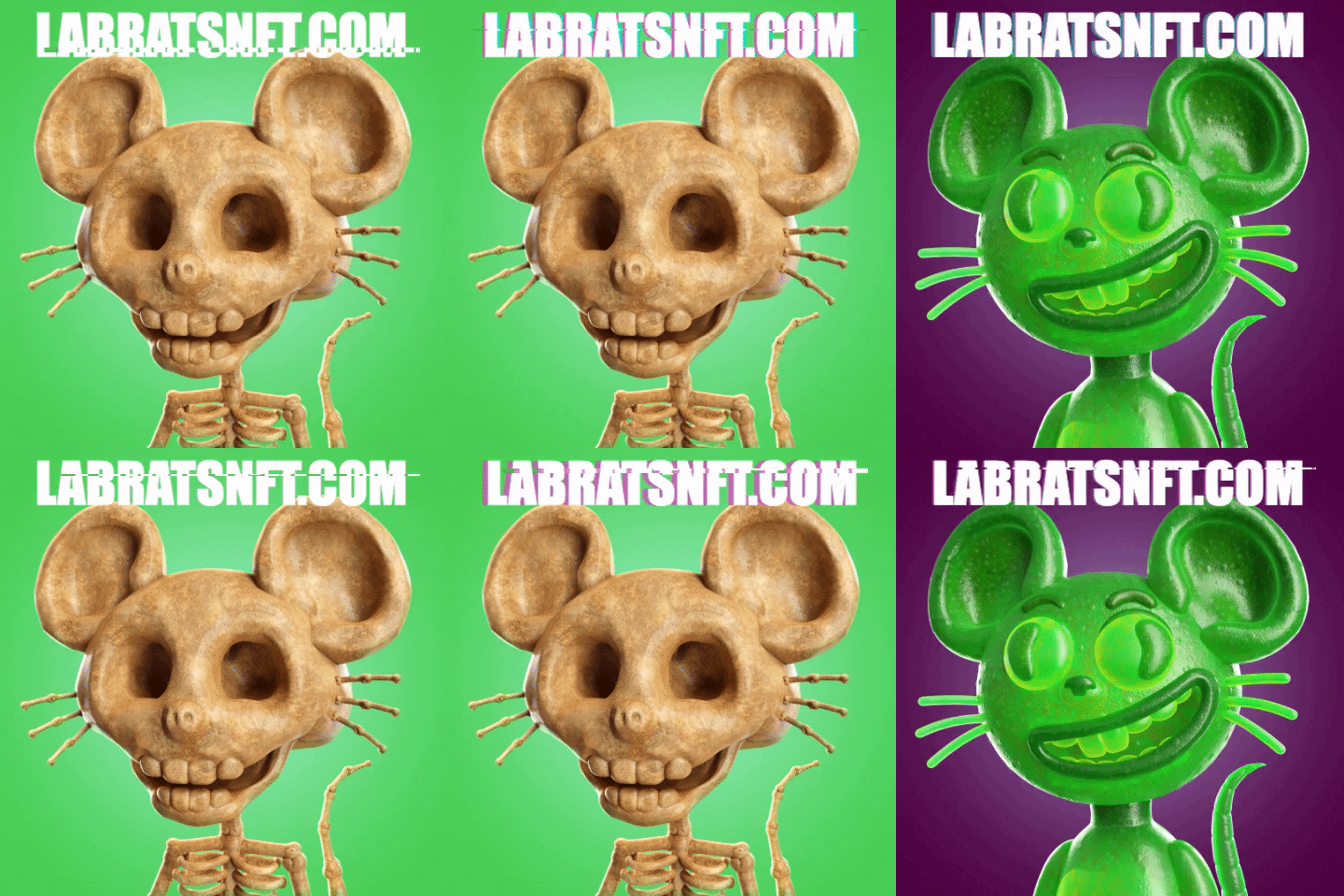
As with all crypto projects, community plays a huge part in the success or failure. To help build hype around the collection I created a set of GIFs, videos and images that could be shared across social media and within our Discord.
Site design
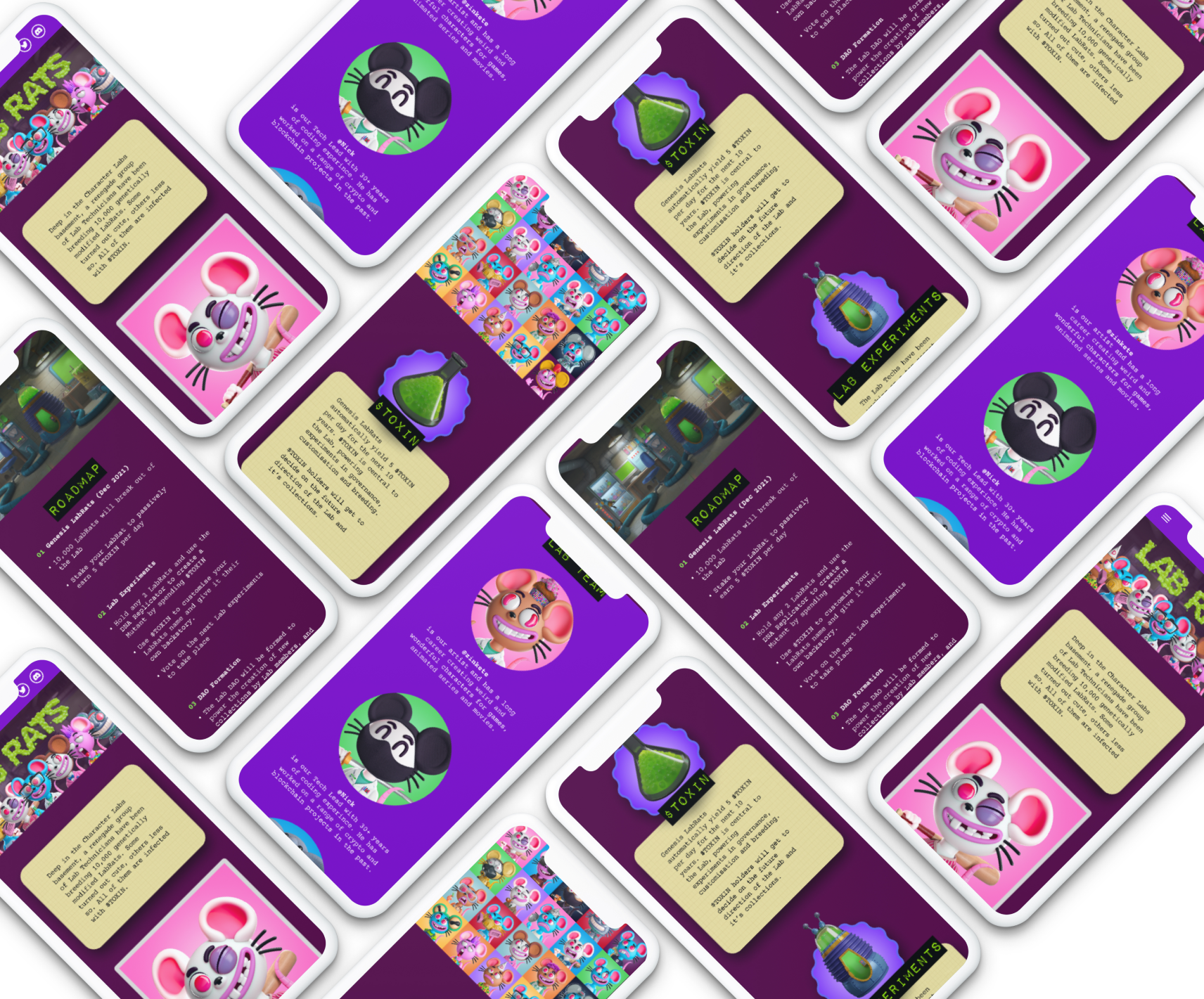
The website was often the first touchpoint for people finding the project and it was important that it showcased the artwork whilst also providing important information such as the launch date, info on how to mint and links to the community on Discord.
Building trust through vision
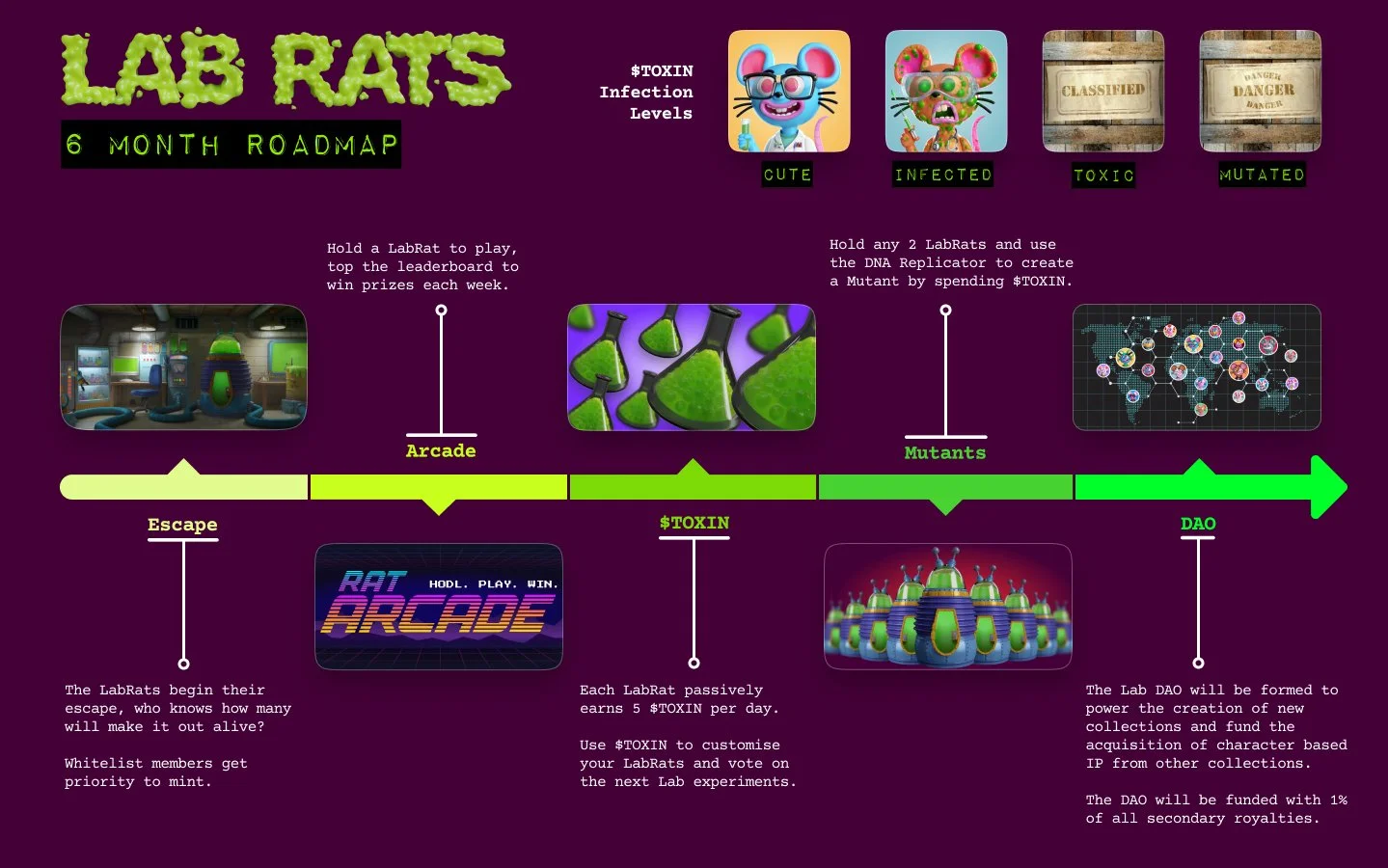
Before the launch of the collection it was vital to build trust with the community. Unfortunately the NFT space is rife with scam projects where the teams behind them rug pull (disappear with all the money, leaving the project to die and the NFTs worthless). I decided to create a roadmap image that showed the short, medium and long term vision for the project and where the money would be spent. Holders responded positively to this, and to build further trust we ran a series of AMAs where we invited the community to talk with us about what they wanted to see from the project.
Play = engagement
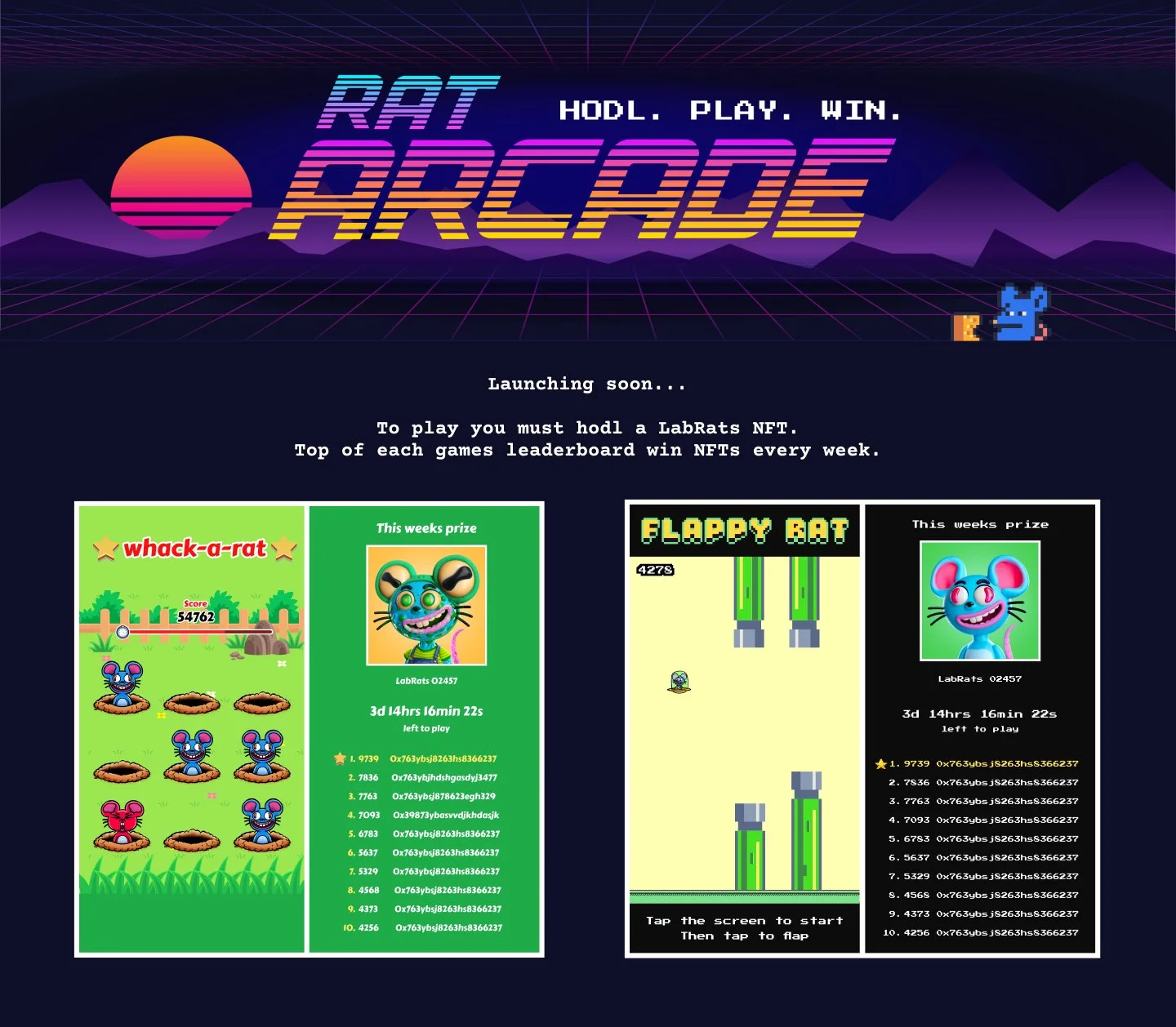
Keeping engagement within the community high is a key challenge within these projects. You need to keep people entertained if you want them to stick about. I noticed that one of the most popular activities within our community was a casino bot that people could use to play games like blackjack. I decided to tap into this behaviour by building a set of simple arcade style games that people could play on the website by connecting their crypto wallet. Each game had a leaderboard and the highest scores each week were awarded prizes. These games became extremely popular within the community and helped to drive engagement and generate more interest in the project.
Results
During the launch just under 1,000 LabRats were sold for 0.04ETH each, which at the time equated to around $150,000. After the launch we hit some quite serious technical bumps with our smart contract (a single mistake in one line of code had huge consequences), which made it impossible to continue the collection. However, the LabRats evolved into the Mvtxnts collection which continues to grow and evolve.